TV, audio and streaming
HDMI, HDR, TV audio return channels and what streaming quality really depends on.
A television, a source device and a speaker system have to agree on a format before anything reaches your eyes or ears, and the label on the box rarely says which formats are actually supported. Most features in the HDMI and HDR specifications are optional, so two devices can both claim a version number and still fall back to something lower when connected.
These guides explain what each standard carries and where a chain quietly downgrades. Start with the panel and picture guides for a new set, or with HDMI and ARC if the sound is the problem.
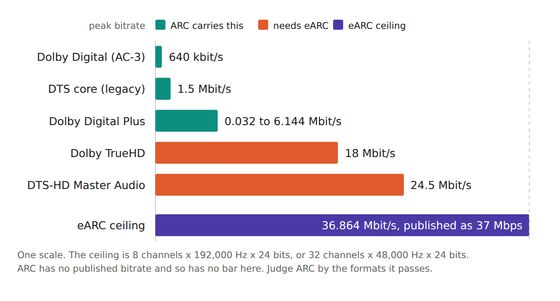
ARC vs eARC: getting sound out of your TV correctly
ARC tops out at compressed 5.1 while eARC carries 37 Mbps of uncompressed audio, so lossless Dolby Atmos needs eARC, the labeled port and the right cable.
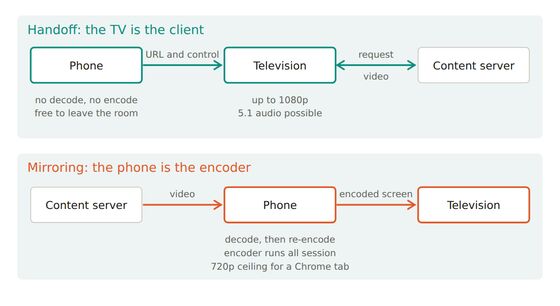
Casting is two mechanisms, not one
Casting either hands the TV a URL to fetch by itself or ships it an encoded copy of your screen. Which one a button triggers explains most failures.
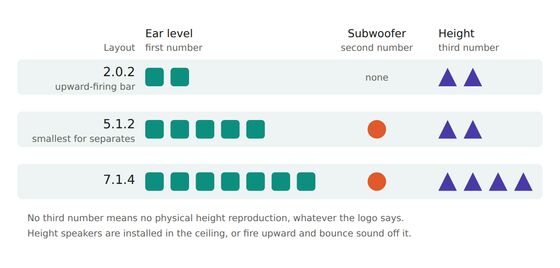
Dolby Atmos and surround sound formats, decoded
Why Dolby Atmos is metadata inside TrueHD or Dolby Digital Plus, what the third number in 5.1.2 tells you, how DTS:X compares, and what virtual height does.
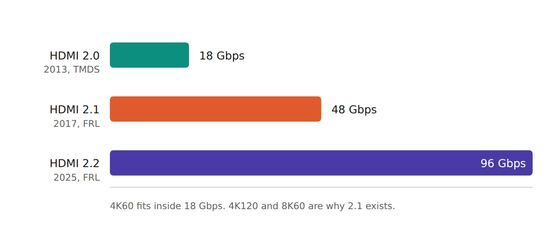
HDMI 2.0 vs 2.1: when the cable actually matters
HDMI 2.0 tops out at 18 Gbps and HDMI 2.1 at 48 Gbps, but every 2.1 feature is optional, so only Ultra High Speed cable certification guarantees anything.
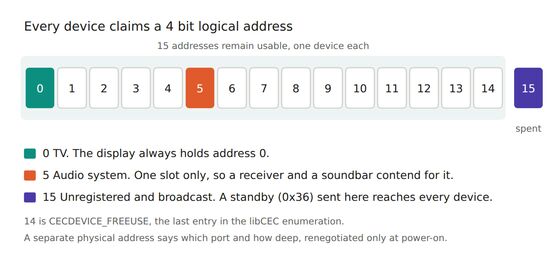
HDMI-CEC: one remote, many brand names, and why it half works
HDMI-CEC is a slow control bus on pin 13, sold under 22 trade names. What it does on the wire, how it fails, and which device to disable first.
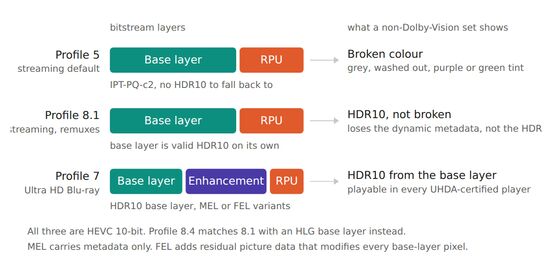
HDR formats explained: HDR10, HDR10+, Dolby Vision and HLG
HDR10 sends one tone-mapping curve per film, HDR10+ and Dolby Vision send one per scene, and HLG sends none, but your TV's brightness matters more.

How much internet speed streaming actually needs
Netflix asks 15 Mbps for 4K, Apple 25, Max 50+. Here is what every major service actually publishes, and why buffering is usually latency instead.

Impedance, sensitivity, and whether you need an amp
Impedance is the number everyone quotes and sensitivity is the number that decides whether your phone can drive a pair. How to run the arithmetic yourself.

Lossless vs lossy audio, and the re-encode nobody counts
What lossy encoders discard, what FLAC guarantees, why 24/192 does not help playback, and why Bluetooth re-encodes your lossless file before you hear it.

OLED, QLED and Mini LED: how the panel types actually differ
OLED is emissive and needs no backlight, while QLED is a quantum dot film and Mini LED is a backlight, so both are LCD upgrades and not panel types.

Projector vs TV: the room decides it, not the spec sheet
Projector lumens, contrast and HDR claims all assume a room you probably do not have, and the throw ratio settles the choice before the picture does.

Refresh rate, VRR and motion smoothing: what the Hz number hides
Motion Rate 120 usually means a 60Hz panel. How native refresh, VRR, ALLM and frame interpolation actually work, and what a PS5 or Xbox really needs.

Soundbar or AV receiver: which one you actually need
A receiver buys discrete amplified channels, six or seven HDMI inputs and multi-position room correction. A soundbar buys one cable. Which one fits you.

Speaker and subwoofer placement that measurably helps
Where the speakers and the subwoofer sit outranks every setting on the receiver. The 60 degree triangle, toe-in, reflection points, and the sub crawl.

TV size and viewing distance: when resolution stops mattering
Work out the exact distance where 4K stops being visible on your TV, using the ITU's own viewing-distance table, plus the honest answer on 8K.

The TV picture settings that actually matter
What picture mode, color temperature, sharpness, local dimming and HDR tone mapping really do, and why the factory showroom preset is wrong at home.


